Poultry · Machine
Egg collection systems
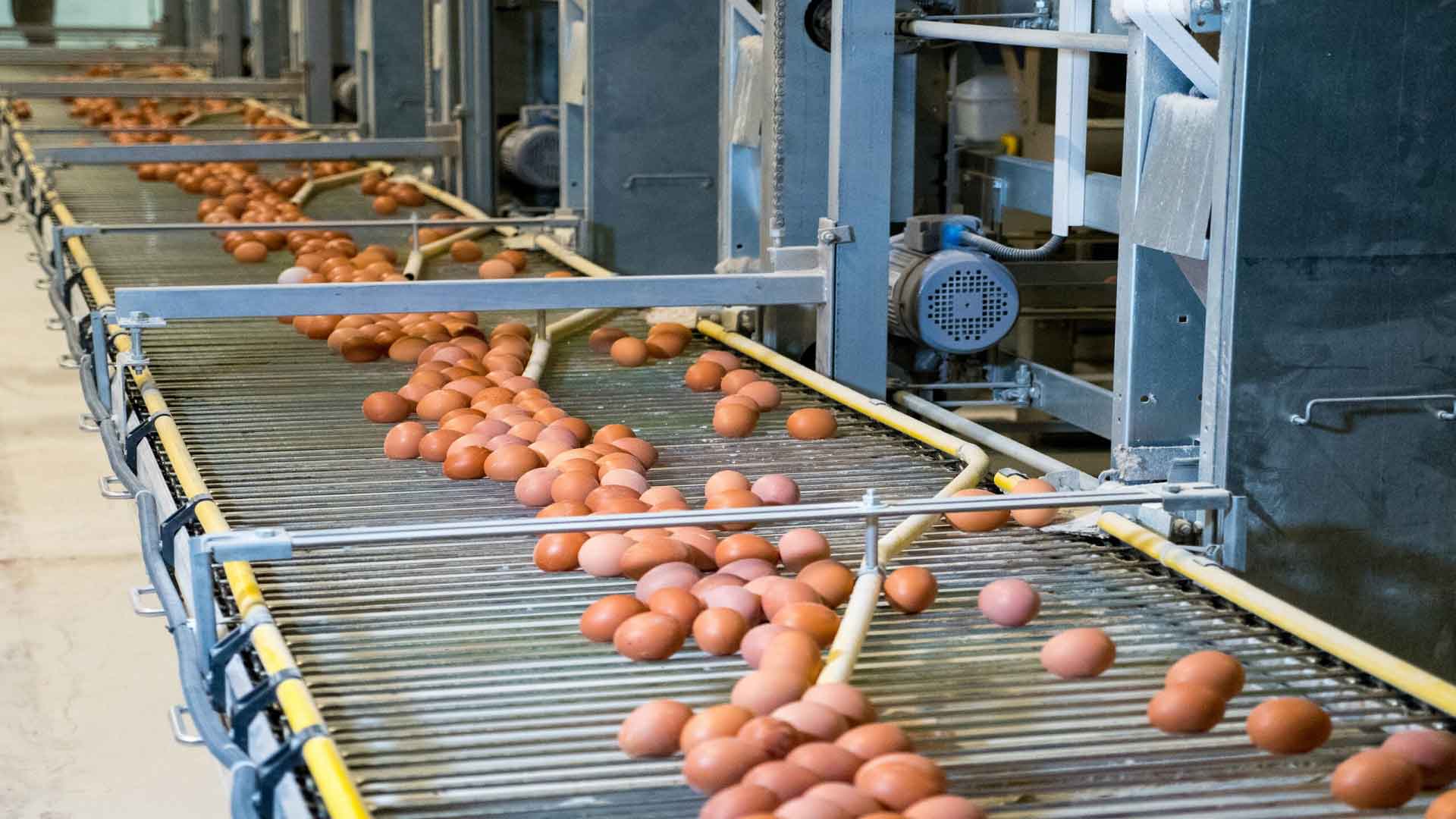
Move eggs from cage rows to a central handling point. Specify your shed layout, transfer height and counting requirements when planning an automated collection system.
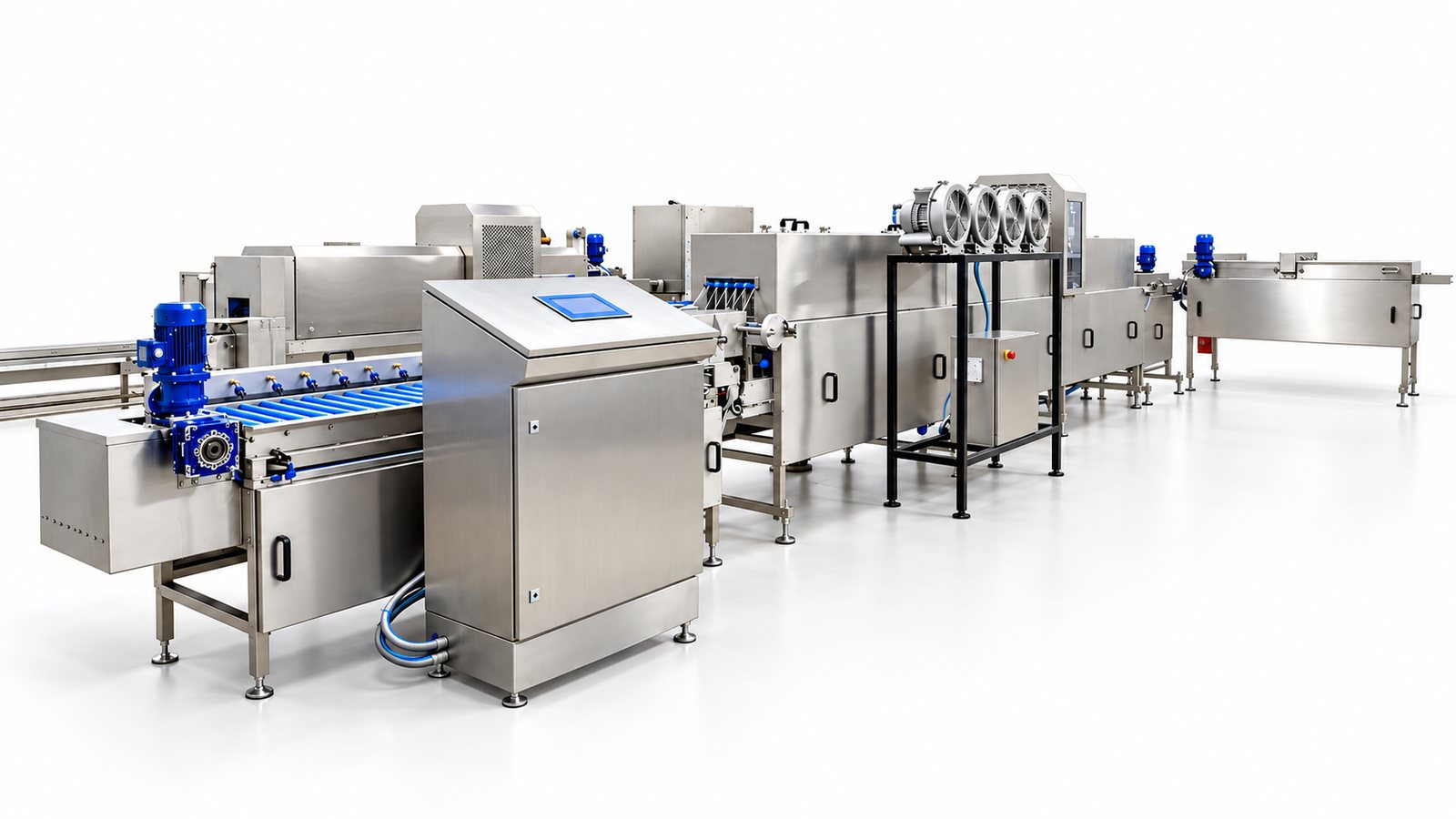
Connect collection, cleaning, inspection, grading and packing stages around your operation. Build a modular layout with the stages you need now and a clear route for future additions.
Reference information reviewed 21 October 2026. Confirm current ratings, included stages and the final configuration in your quotation.
| Stages | Loading, cleaning, drying, candling, grading, UV-C, printing, oil coating, packing |
|---|---|
| Construction | Self-contained modules, each on its own frame |
| Interface | Standard conveyor interface between modules |
| Weight grading accuracy | ±1 gram per egg |
| Grade separation accuracy | Not less than 99% |
| AI candling and grading | Not less than 95% correct classification |
EPH means eggs per hour; TPH means tonnes per hour. Operating output depends on the selected configuration and input conditions. Prices and lead times are confirmed on enquiry.
Loading, cleaning, drying, candling, grading, UV-C, printing, oil coating, packing. Share your site layout and operating requirements so the configuration can be assessed.
Include peak eggs per hour and operating hours; cleaning, inspection and grading stages required; tray formats, utilities and available floor space. Add your quantity, delivery location and any drawings or photographs you can share by email.
Share the infeed and outfeed heights, adjacent equipment, available floor space and utility connections. Integration and any layout changes must be confirmed for your project.
Move eggs from cage rows to a central handling point. Specify your shed layout, transfer height and counting requirements when planning an automated collection system.
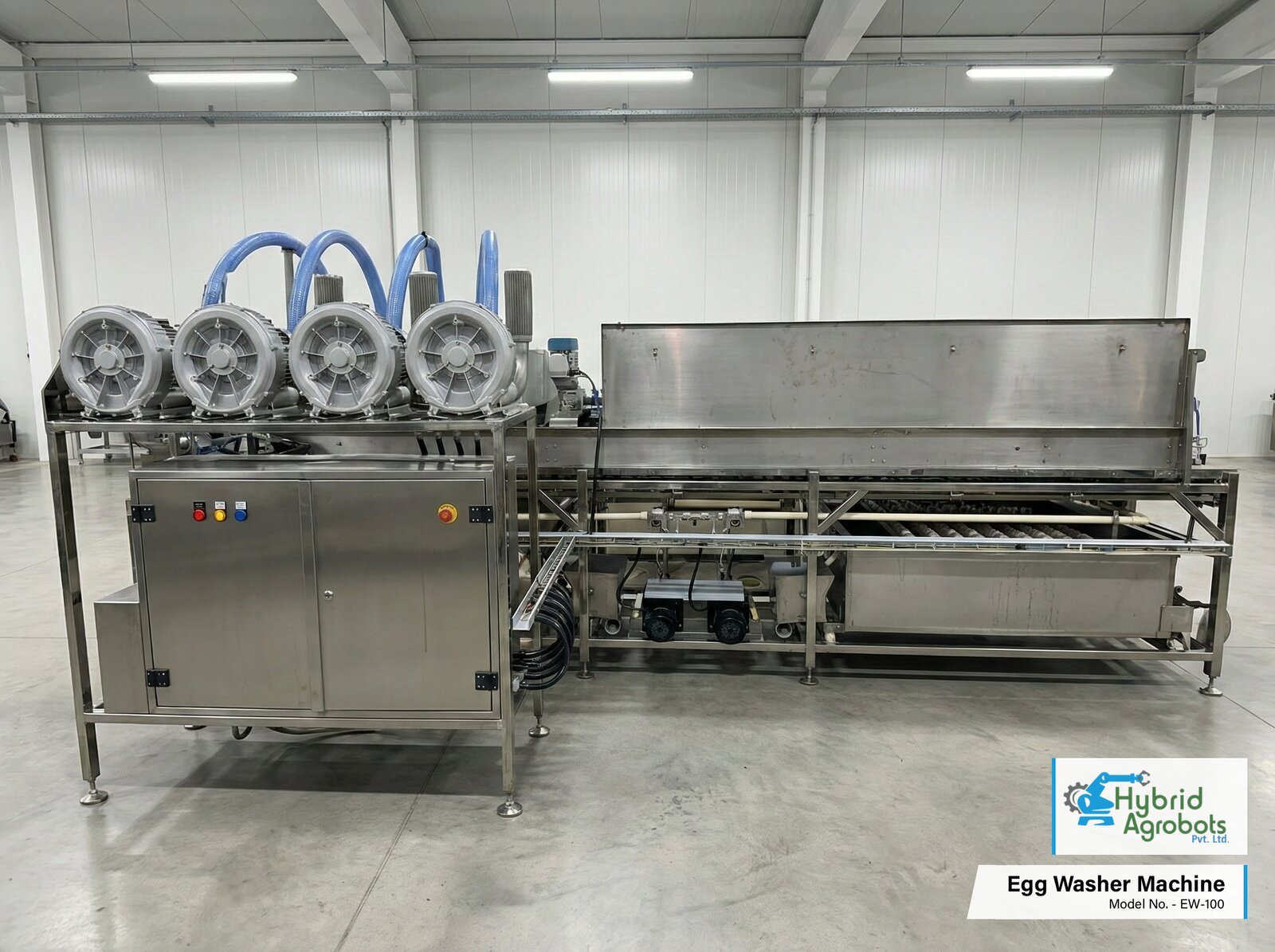
Prepare eggs for inspection and packing with a water-washing and air-drying stage. Choose a lane configuration around your peak output and the available water, drainage and power supply.
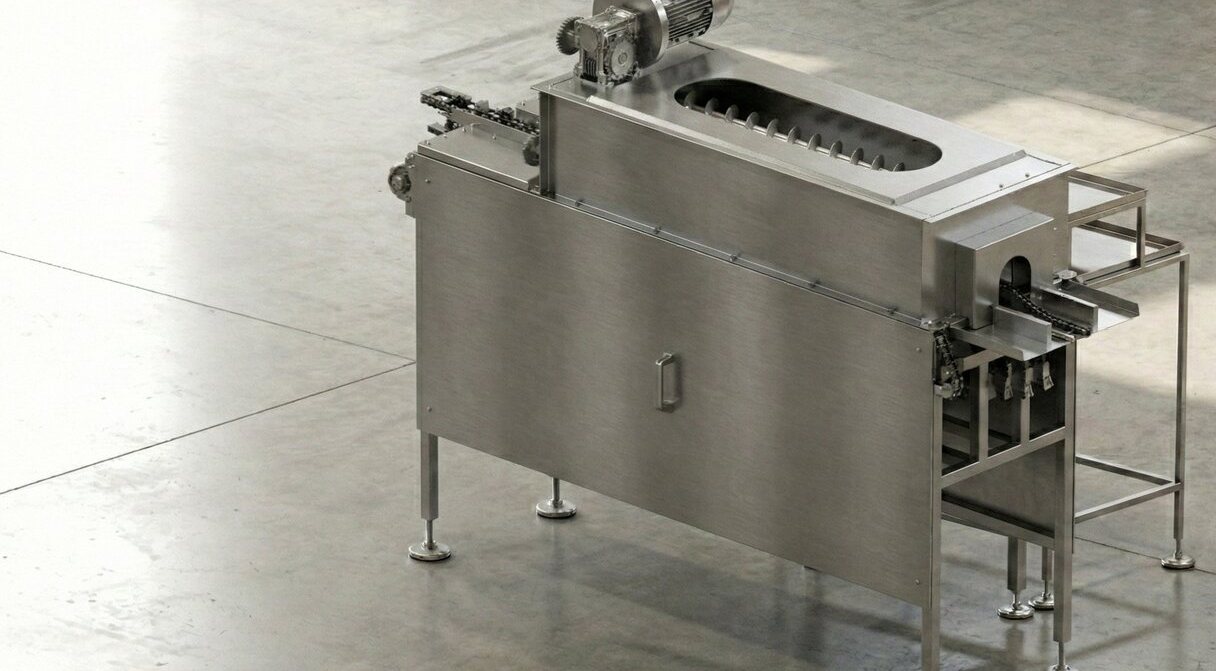
Remove loose shell debris with rotating brushes in a dry process. Explore single-lane or multi-lane configurations when a water-based cleaning stage is not part of your line.